

Ama-Dablam Exp (6,812M/ 22,349 FT) - Best Tours and trekking agency in Nepal

CALL/WHATSAPP/ VIBER US AT:+977-9851076838

EMAIL US AT:info@snowpaltreks.com

  • Home
  • Ama-Dablam Exp (6,812M/ 22,349 FT)

Ama-Dablam Exp (6,812M/ 22,349 FT)

  • Trip Code Icon Trip Code: AMAD
  • Calendar Icon Trip Duration: 28 Days
  • Destination Icon Destination: Nepal
  • Group Size Icon Group Size: 1-15
  • Season Icon Season: Spring/Autumn
  • Max Altitude Icon Max Altitude: 6,812M/ 22,349 FT
  • Trip Start/End Icon Trip Starts/Ends: Kathmandu/Kathmandu
  • Transportation Icon Transportation: Plane/Trek/Climbing
  • Accommodation Icon Accommodation: Hotel & Guest houses/Tent
  • Trip Grade Icon Trip Grade: Strenuous

OVERVIEW

Overview

Ama-Dablam is a stunning mountain in the eastern Himalayas of Nepal, standing tall at 6,812 meters (22,349 ft).
The name means “Mother’s Necklace”, with the long ridges representing a mother’s arms and the hanging glacier
resembling a traditional Sherpa pendant known as the Dablam.

This iconic peak dominates the skyline for trekkers en route to Everest Base Camp and is considered the
third most popular Himalayan peak for permitted expeditions.


Climbing History

Ama-Dablam was first summited on 13 March 1961 by Mike Gill (NZ), Barry Bishop (USA), Mike Ward (UK),
and Wally Romanes (NZ) via the Southwest Ridge during the Silver Hut Expedition led by Sir Edmund Hillary.


Best Time to Climb

The optimal climbing seasons are from April to May and October to late November, similar to Mt. Everest.

Route: The Southwest Ridge

Why Southwest Ridge?
This is the most popular and safest route with minimal avalanche danger, making it ideal for most climbers.

Climbers typically establish three camps: Camp 1 (5,600m), Camp 2 (5,900m), and Camp 3 (6,200m),
with Base Camp at 4,600m. Most climbers summit from Camp 2.

Climbing Experience Required

Although not extremely technical, Ama-Dablam requires good rock and ice climbing skills.
Most of the route has fixed ropes, and climbers must be proficient in rope ascents and descents.

Unlike many other Himalayan climbs, there is no glacier crossing, and the base camp is on a wide grassy plain.

Camp Details

Base Camp (4,600m)

A large and scenic area, with space to play volleyball and soccer. Our support team provides full meals,
individual tents, internet access, satellite phones, and solar charging.

Camp 1 (5,700m)

A 4-5 hour trek with some rock scrambling. Tent space is limited, requiring coordination among teams.

Camp 2 (6,080m)

The most technical section. Includes climbing over rock ridges and the Yellow Tower. This is a high-exposure site.

Camp 3 (6,200m)

Optional camp on snow and ice terrain. Great views of surrounding peaks. Some climbers summit directly from Camp 2.

Summit Day (6,812m)

The final climb includes snow-ice pitches (40º+) and steep snowfields (30–50º). The summit rewards climbers
with breathtaking views of Everest, Lhotse, Nuptse, Makalu, Cho Oyu, and more.

Summit day typically takes 10 hours round trip from Camp 3 or Camp 2.

Combined Expeditions

Many climbers combine the Ama-Dablam climb with a trek to Everest Base Camp or an ascent of Island Peak
for acclimatization and additional adventure.

🧗 Required Climbing Experience

Core Skills

  • Solid foundation in both rock and ice climbing.

  • Comfort with exposure and technical routes is essential.

Fixed Rope Proficiency

  • Competency in ascending and descending on fixed lines.

  • Must be efficient at anchor transitions and self-management on vertical terrain.

Technical Terrain

  • Includes steep rock (e.g., Yellow Tower) and highly exposed ridgelines.

  • Must be comfortable on 60° ice and snow and vertical mixed terrain.


🏕️ Camp-by-Camp Climb Progression

Camp Altitude Key Info
Base Camp 4,600m Starting point. Acclimatization and training.
Camp One 5,700m 4–5 hr climb; mostly trekking trail with minor scrambling.
Camp Two 6,080m Most technical section: includes Yellow Tower and exposed ridge. Very limited tent space.
Camp Three (Optional) 6,200m Just below the Dablam (hanging glacier). Only used if necessary.
Summit Push 6,812m From Camp Two: ~10 hours round trip on steep snow and ice (30°–50°).

🎒 Gear & Packing Overview

Lukla Flight Baggage Allowance

  • Checked Duffel: 10 kg (22 lbs)

  • Carry-on Daypack: 5 kg (11 lbs)

Porter/Yak Load Limit

  • 15 kg (33 lbs) max. Please respect this limit for staff welfare.

You Carry Daily:

  • Essentials like water, snacks, extra layers (~5–8 kg).


🧗‍♂️ Climbing Gear Checklist

Essential Gear (Bring Your Own):

  • Harness: Petzl, BD, Arc’teryx

  • Helmet: Petzl Sirocco/Meteor, BD Vision/Vapor

  • Ice Axe: General mountaineering axe (Petzl Glacier, BD Raven)

  • Crampons: Steel with anti-balling plates (Petzl Sarken, Grivel G12)

  • Ascender (Jumar): Petzl/BD

  • Descender/Belay Device: Reverso, ATC-Guide

  • Carabiners: 4–5 locking, 2–3 non-locking

  • Slings/Prusiks: 2–3 slings + prusik loops

  • Buy Safety-Critical Gear at Home – Counterfeit risk is high in Nepal.

🥾 Footwear

Type Notes Brands
Climbing Boots 8000m-rated double boots La Sportiva, Scarpa, Millet
Trekking Boots Mid-weight, waterproof Salomon, Lowa, Merrell
Camp Shoes Lightweight Teva, Crocs
Socks 4–5 pairs Smartwool, Icebreaker, Darn Tough

👕 Clothing Layers

Upper Body

  • Base Layers (x2): Merino or synthetic

  • Mid Layers (x2): Fleece or softshell

  • Down Jacket: Expedition weight with hood (Rab, TNF)

  • Shell Jacket: Waterproof and windproof (Gore-Tex)

Lower Body

  • Trekking Pants (x2): Quick-dry

  • Base Layer Bottoms (x2): Thermal leggings

  • Insulated Pants: Down/synthetic

  • Shell Pants: With full-length zips


🧤 Head & Hand Protection

  • Sun Hat + Beanie

  • Balaclava / Buff (x2)

  • Glacier Glasses (Cat 4) + Ski Goggles

  • Gloves:

    • Liner Gloves

    • Mid-weight Insulated Gloves

    • Expedition Mittens (BD Absolute, OR Alti)


🎒 Bags

  • Expedition Duffel (80–100L): Waterproof, durable

  • Daypack (35–45L): Osprey, Gregory, Deuter


💤 Sleeping System

  • Sleeping Bag: Rated -20°C / -4°F (down preferred)

  • Liner: Silk/fleece

  • Rental Available: Good options in Thamel


🧪 Miscellaneous

  • Trekking Poles

  • Headlamp + Batteries

  • Water Bottles (x2) / Bladder

  • Water Purification (SteriPEN/tablets)

  • Toiletries + Quick-dry towel

  • First Aid Kit + Medications

  • Sunscreen (SPF 50+) + Lip Balm

  • Camera, Power Bank, Cables

  • Documents: Passport, visa, insurance, cash


⛰️ Acclimatization & Altitude Awareness

Altitude Sickness (AMS) Symptoms

  • Mild: Headache, nausea, fatigue

  • Severe: Vomiting, confusion, ataxia, cough (HAPE), drowsiness (HACE)

Golden Rules

  1. Ascend slowly

  2. Stay hydrated (3–4L/day)

  3. Eat well (high-carb)

  4. No alcohol/sleeping pills

  5. Rest if unwell – NEVER ASCEND WITH SYMPTOMS

Medication

  • Diamox (Acetazolamide) – Ask your doctor about dosage and side effects.

What to Do If AMS Occurs

  • STOP ascending

  • REPORT to your guide immediately

  • DESCEND if symptoms worsen

  • DO NOT IGNORE symptoms


🚁 Emergency Procedures & Insurance

Helicopter Rescue

  • Coordinated by guide via satellite phone

  • Requires insurance that covers high-altitude rescue above 6,000m

Mandatory Insurance

  • Must include:

    • Trekking & climbing up to 7,000m

    • Medical evacuation

    • Trip cancellation/interruption


💵 Money, ATMs & Tipping

Cash Needs

  • Withdraw in Kathmandu.

  • Namche has ATMs but may be unreliable.

Budget: $15–$20/day for:

  • Snacks, drinks, Wi-Fi, device charging, showers, souvenirs

Tipping Guidelines

Staff Group Tip (USD)
Lead Climbing Guide $500–800
Assistant Guides $300–500 each
Porters $150–200 each

Pool and distribute as a group in Lukla.


🧘 Cultural Etiquette & Responsible Travel

Respect Local Customs

  • Dress modestly

  • Remove shoes/hats in homes and monasteries

  • Walk clockwise around stupas & mani walls

Environmental Responsibility

  • Carry out all non-biodegradable waste

  • Avoid bottled water – use purification system


🧗 Training & Fitness Requirements

Recommended Physical Preparation

  • Duration: Start training 3–6 months before

  • Focus On:

    • Cardiovascular endurance (hiking, running, cycling)

    • Weighted hikes

    • Strength training (core, legs, back)

    • Practice on steep trails or stair climbs


📡 Communication Plan

  • Base Camp: Satellite phone + internet available

  • On-Mountain: Radio communication between camps

  • Personal Use:

    • Satellite phone use may incur extra cost

    • Wi-Fi: Everest Link cards available at lodges


🏢 Company Credentials

  • Registered with Nepal Government & Department of Tourism

  • Experienced Sherpa Team:

    • UIAGM/IFMGA-certified guides (upon request)

    • Lead guides with multiple Ama Dablam and Everest summits

  • Strong safety record and evacuation protocols

🆘 Emergency Protocol & Mandatory Insurance

Your safety is our highest priority. The remote and high-altitude environment of this expedition requires a robust safety protocol and mandatory personal preparation.

Mandatory Insurance

  • Every member must have a comprehensive travel insurance policy that:

    • Covers mountaineering up to 7,000 meters

    • Includes helicopter rescue and evacuation

  • Proof of insurance must be submitted to our office in Kathmandu before the expedition departs.

  • This is a non-negotiable requirement for your safety and the safety of the team.

📡 Communication

  • Constant communication between high camps and Base Camp via UHF/VHF radios.

  • Base Camp is equipped with a satellite phone for emergencies and coordination with our Kathmandu office.

🧭 Guide Authority

  • Your lead guide is a certified, experienced professional trained in high-altitude mountaineering.

  • The guide has full authority to:

    • Alter the itinerary

    • Halt an ascent

    • Initiate a descent
      — based on weather conditions, team health, or other safety risks.

🚨 Emergency Procedure

  1. Immediate Reporting
    If you feel unwell—especially with symptoms of AMS (Acute Mountain Sickness)—report to your guide immediately.

  2. Assessment
    Your guide will assess your condition and determine the best course of action.

  3. Action
    Based on severity, actions may include:

    • Taking a rest day

    • Immediate descent to a lower altitude (most effective AMS treatment)

  4. Evacuation
    In a life-threatening emergency, your guide will:

    • Coordinate a helicopter evacuation

    • Liaise with our Kathmandu office and your insurance provider


🧗‍♂️ Guide Credentials & Company Commitment

The success and safety of your expedition rely heavily on the competence of the guiding team.

👨‍🏫 Experienced Guides

  • All lead guides are certified professionals with extensive experience on Ama Dablam and other 8,000-meter peaks.

  • They are trained in:

    • Technical rock and ice climbing

    • Rescue procedures

    • High-altitude medical care

🏢 Professional Operation

  • We are a legally registered, government-licensed expedition operator in Nepal.

  • We practice responsible tourism, ensuring:

    • Fair wages for all staff

    • Insurance and quality gear for porters and climbing Sherpas

    • Ethical and sustainable practices

🛡️ Safety Record

  • Our high safety standard is maintained through:

    • Meticulous logistical planning

    • Acclimatization-focused itineraries

    • Comprehensive support and backup plans


💪 Physical Fitness & Training Plan

Ama Dablam is a serious technical climb. The accompanying Everest Base Camp trek also demands excellent cardiovascular endurance and leg strength.

🩺 Medical Clearance

  • Prior to booking, you should undergo a full medical check-up.

  • Ensure your doctor clears you for strenuous physical activity at extreme altitudes.

🏃‍♂️ Cardiovascular Endurance

  • Begin training 6–9 months before departure.

  • Engage in aerobic exercises 4–5 times per week:

    • Running, cycling, stair climbing, swimming

    • Each session: 1–2 hours of sustained activity

🏋️ Strength Training

  • Focus on functional strength for mountain travel.

  • Train major muscle groups:

    • Legs & Core: Squats, lunges, step-ups, planks

    • Upper Body: Pull-ups, push-ups, rows, shoulder presses
      (critical for rope work and backpack management)

🎒 Hiking Practice

  • Simulate mountain conditions as much as possible.

  • Perform weekly hikes (5–8 hrs) with a weighted pack (10–15 kg).

  • Prioritize steep, uneven terrain if available.

🧗 Mountaineering Skills

  • You must already possess solid:

    • Rock climbing techniques

    • Ice climbing fundamentals

    • Fixed-rope ascent/descent proficiency

If you lack this experience, please complete a technical mountaineering course before joining this expedition.

ITINENARY

Itinerary of Ama-Dablam Exp (6,812M/ 22,349 FT)

Upon arrival at Tribhuwan International airport in Kathmandu meet our airport
representative and transfer to the hotel.
Overnight at Kthmandu on BB basis (1,350m/4,429ft)

For the Sightseeing you will have option to choose the spots among seven
UNESCO world heritage sights. At first after Breakfast we head to Department of
Tourism for Orientation Class by government of Nepal then rest of day we
proceeds sightseeing to world heritage site to Syambhunath Stupa, The Buddhist

sanctuary said to be nearly 2000 years old. The hill itself is pleasant place
overlooking the entire valley of Kathmandu. The all-seeing eyes of Lord Buddha
painted in prominent blue atop the dome are visible from long distance from
around the Kathmandu city. Then proceed to patandurbar square also call Lalitpur
the city full of fine arts. It covers the dozens of temples like Krishna Mandir,
Kumbeswor temple, Golden temle. Next site proceeds to Pashupatinath Temple
the holiest Hindu Temple situated on the bank of sacred holy river Bagmati.
Sightseeing continues to the Boudhanath Stupa the biggest Stupa around
inhabited by Tibetan Refugee since 1959AD. The day ends at Kathmandu Durbar
Squar where can visit the Living GoddesKumari who appear on the balcony of her
temple to greet her devotees (Need to be on time), Kastamandap temple made
out of single tree and named Kathmandu as it was known as Kantipur in earlier
times. Kathmandu Durbar Square cover dozens of temples concluding Kumari
temple, Hanuman Dhoka, Maizudewal, Taleju temple, Nautale Durbar, Kaal-
Bhairav, freak street and many more.
Overnight in hotel on BB basis. (1350m/4429ft)

Breakfast served in the early morning (or Packed for take away) and drive to
Kathmandu airport for your domestic flight to Lukla. It’s takes approximately 25 to
30 minutes. There’ll be time to explore the village whilst the Sherpa crew sort and
load equipment. From Lukla we descend on a wide trail northwest to the village
of Chomlung in the DudhKosi valley. The valley radiates energy through beautiful
pine and rhododendron forest. The walking is easy and we follow the river’s
course, passing through the village of Ghat. Our destination is the small village of
Phakding.
Overnight in Phakding at Lodge (2,640m/8,661ft)
Meal: Breakfast, Lunch, Dinner

Overnight in Phakding at Lodge

Meal: Breakfast, Lunch, Dinner

After the breakfast, we start our journey to Namche Bazaar, from Phakding we
head up valley on a busy trail. Continue along beside the DudhKosi amongst
beautiful alpine scenery, through the fragrant blue pine and fir forest, glimpsing
spectacular views of Kusum-Kangru (6,369m) and Thanserku (6,608m) along the
way. Our lunch spot in Monjo, Leaving Monjo, we again cross the DudhKosi, to
the western bank at Jorsale prior to trekking through the entrance to the
Sagarmatha National Park. Continuing upstream along the banks to the
confluence of the Bhote-Kosi and Dudh-Kosi, it is here we begin our first sustained
ascent to Namche Bazaar after crossing the large suspension bridge. Walking at a
slow pace, we have a fantastic photographic opportunity as the peaks of Everest
(8,848m), Lhotse (8,511m), Nuptse (7,879m), Ama-Dablam (6,856m) and Taweche
(6,542m) come into view for the first time. Climbing again, the path takes us
through pine trees to reach the distinctive horse- shoe shaped bowl containing
the village of Namche Bazaar. Stay in the heart of the village, with the afternoon
free to bargain in the shops for “Tibetan artifacts, relax over a cup of tea and talk
with our experienced Trekking and Climbing guides and simply marvel at the
beautiful scenery.
Overnight in Namche at lodge (3,440M/11,286ft)
Meal: Breakfast, Lunch, Dinner

Overnight in Namche at lodge

Meal: Breakfast, Lunch, Dinner

Full day to acclimatize Exploring Namche and Sherpa culture. Wake up early in the
morning and climb to the ridge above Namche will be rewarded with the stunning
sunrise over the panorama of the Khumbu peaks. Namche is famous for its local
market or bazaar. Each week, Sherpas from the surrounding villages come to buy
food and to socialize. Any food not grown locally, such as rice, corn and some
vegetables is brought in from the lowland village and city. Spend the morning
exploring this colorful and lovely spectacle. Perhaps walk along the Thame Valley
in the afternoon or visit the National Park Headquarters to see the interesting
displays of Sherpa lifestyle and culture, mountaineering in the park, flora and
fauna.

Overnight in Namche at Lodge (3,440M/11,286ft)
Meal: Breakfast, Lunch, Dinner

Overnight in Namche at Lodge

Meal: Breakfast, Lunch, Dinner

After Breakfst we trek out of the village bowl and follow a small trail high above the Dudh Kosi River, where the views are incredible, behind to the west, the ridge of Nupla and Kwangde Himal (6194m), across the valley to the south, the towering ice- fluted walls of Thamserku (6623m), and Everest looms above ridge, a black triangular rock, “Sagarmatha.” On a small ridge across the valley, the monastery of Thyangboche can be seen, an against the gigantic mountain background. Ascending towards Khumjung, visit the Everest View Hotel on route, where coffee or hot chocolate and views of Everest are the order of the day! We descend to Khumjung and after staying in the more westernized town of Namche Bazaar, these village make a welcome change. Here tourism has hardly changed the life of the Sherpas. The afternoon has been left free to assist with further acclimatization.

Overnight in Khumjung at Lodge

Meal: Breakfast, Lunch, Dinner

From Thyangboche, we descend through a forest of birch, fir, juniper and
rhododendron, to the nunnery at Deboche. The national bird of Nepal Danphe/
pheasant and Himalayan Thar (wild goats) may encounter frequently. We cross
the Imja-Khola, ascending gradually, with the beautiful Ama-Dablam dominating
the skyline. The afternoon walk follows a trail high above the Imja-Khola through

Pangboche. A little further upstream we cross the tributary stream and ascend
over glacial moraines to our lodge in the ‘summer settlement’ of Dingboche.
Overnight in Dingboche at Lodge (4,360m/14,304ft)
Meal: Breakfast, Lunch, Dinner

Overnight in Khumjung at Lodge

Meal: Breakfast, Lunch, Dinner

Today we have a full day for acclimatization and exploring. Dingboche is a
beautiful patchwork of small fields enclosed by stone walls protecting the crops of
barley and potatoes from the cold winds. It is occupied mainly through the
monsoon months, when large numbers of yaks are brought here to graze on the
valley pastures. Those looking for a pleasant walk can head up the valley towards
Chukung. The views are fantastic, the towering south face of Lhotse to the north,
Island peak in the centre of the valley, and the fluted ice – walls of unnamed
peaks that line the southern end of the valley from a hauntingly beautiful sight.
Overnight in in Dingboche at Lodge (4,360m/14,304ft)
Meal: Breakfast, Lunch, Dinner

We are now well above the tree line and your journey today’s brings you to Dusa
from where you descend to a stream at 4,850m. We begin our climb of the
Khumbu Glacier en-oute to the tea shops at Dughla. Continue along the moraine
of the glacier, with views of Kala Pattar and Pumori to reach Lobuche at 4,910m
for your evening stay. Take time to rest and acclimatize for this unforgettable day.
Overnight in Lobuche at Lodge (4910m.16,108ft)
Meal: Breakfast, Lunch, Dinner

Wonderful and rewarding day, first final destination of this trip to Everest Base
Camp set out on the opposite the dreaded icefall-the most dangerous section of
the Everest Summit. Rocky trail is in busy in April/May with porters carrying in
supplies and the site is a riot of colorful tents perched on the ice. Everest Base
Camp 5,364m the second destination of this trip, is the main camp for
mountaineers and Trekkers feel very happy to be in Everest Base Camp as it
makes a Life time memories for the adventure fulfillment. Retrace back from
Everest Base Camp to Gorak-Shep.
Overnight in GorakShep (5,140m/16,863ft)

Meal: Breakfast, Lunch, Dinner

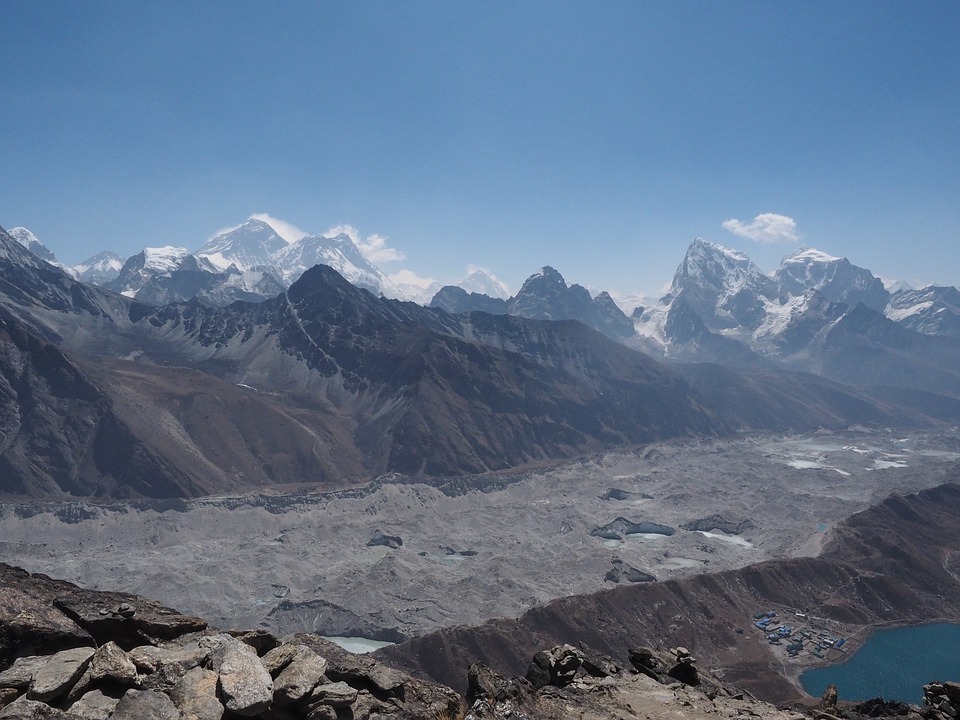
Early in the morning climb up to Kalapattar the third destination of this trip to
view sunrise awakening of the Himalayan chain along with 360 0 Degree
Outstanding spectacular view of numerous sky towering mountains including
Mt. Everest (8,848m), Mt. Lhotse (8,516m), Mt.LhotseShar (8,382m), Mt.ChoOyu
(8,201m), Mt. Pumari (7,165m), Mt. Khumbtse (6,639m), Mt. Numptse (7,864m),
Mt. Amadablam (6,814m), Mt.Changtse (7,550m), Mt.Cholatse (6,335m), and
many more other peaks that crowd the horizon the all directions. Down back to
GrakShep for breakfast and then retrace to Lobuche continuing south on the
Everest-Lukla trail to Pheriche for a lower and warmer night.
Overnight in Pherice at Lodge (4,240m/13,910ft)
Meal: Breakfast, Lunch, Dinner

After descending from ultimate descent, today is an easier walk to the lower
altitudes. We follow the wide alpine valley Continue down to Orsho, then on
through Lower Pangboche. After Lunch at Pangboche we down to ImjaKhola, the
gradually up to to Ama-Dablam Base Camp is set in a beautiful meadow, high on a

ridge surrounded by towering Himalayan peaks. A peaceful, tranquil position,
surely one of the wonders of the world is spectacularly situated.
Overnight in Ama-Dablam Base Camp (4,600m/15,092ft)
Meal: Breakfast, Lunch, Dinner

A leisure or rest day at Ama Dablam Base Camp (4,600m/15,092ft) offers a
perfect opportunity to acclimatize while soaking in the dramatic beauty of the
surrounding Himalayas. Nestled beneath the majestic pyramid of Ama Dablam,
the camp provides breathtaking views of towering peaks like Lhotse, Nuptse, and
Everest. Trekkers and climbers can spend the day exploring the nearby ridgelines
for short hikes, relaxing with a book, or enjoying warm drinks in the sun-drenched
tents. It's also an ideal time to reenergize, check gear, and mentally prepare for
higher altitudes. The peaceful ambiance and crisp mountain air make this rest day
both refreshing and inspiring.
Overnight in Ama-Dablam Base Camp (4,600m/15,092ft)
Meal: Breakfast, Lunch, Dinner

Today is a crucial practice and rehearsal day at Ama Dablam Base Camp in
preparation for the climb to Camp One. Alongside our experienced climbing
Sherpa, we focus on technical training and safety procedures, essential for
ascending this iconic peak. We spend the day practicing the use of climbing
equipment such as harnesses, carabiners, ascenders, descenders, and ropes on
nearby ice or rock faces. The Sherpa guides us through fixed rope techniques,
anchor systems, and proper movement on steep and exposed terrain. We also
discuss the symptoms and prevention of altitude sickness, learning how to listen
to our bodies as we climb higher. This rehearsal builds confidence, sharpens our

climbing skills, and ensures we are mentally and physically prepared for the
challenging ascent ahead.
Overnight in Ama-Dablam Base Camp (4,600m/15,092ft)
Meal: Breakfast, Lunch, Dinner

The climb from Ama-Dablam Base Camp (4,600m/15,092ft) to Camp One
(5,700m/18,800ft) is a steep and challenging ascent that marks the beginning of
our true alpine adventure. The route begins with a gradual climb over grassy
ridges and rocky moraine before transitioning into steeper granite slabs and
narrow paths. As we gain elevation, the air becomes thinner and the views more
expansive, offering incredible panoramas of the Khumbu Valley and surrounding
peaks. Roped in and guided by our experienced climbing Sherpa, we carefully
navigate technical sections using fixed lines. Upon reaching Camp One, perched
on a narrow rocky ledge, we find our tents already pitched and secured by our
support Sherpas in advance. We settle into our tent for the night, surrounded by
towering cliffs and stunning glaciers, mentally preparing for the more demanding
climbs to come. Sharing this high-altitude camp with our Sherpa provides both
reassurance and camaraderie in this dramatic mountain setting.
Overnight in Camp One (5,700m/18,800ft).
Meal: Breakfast, Lunch, Dinner

Today’s climb from Camp One (5,700m/18,800ft) to Camp Two (6,080m/19,947
feet) and back is a vital part of our acclimatization and preparation for the summit
push. The route is technical and demanding, involving exposed ridges, vertical
rock faces, and fixed rope sections that require focus, skill, and endurance. We
ascend along the narrow ridgeline, using ascenders and safety gear to navigate
the rock towers and traverse steep, exposed slabs. This section offers stunning

views and a true taste of high-altitude alpine climbing. Camp Two, set beneath
the famous “Yellow Tower,” is perched dramatically on a small rock platform,
surrounded by towering ice walls. After a short rest and inspection of the camp
setup, we carefully descend the same route back to Camp One. This round trip
helps us adapt to the altitude, strengthen our climbing rhythm, and build
confidence for the upcoming ascent to higher camps.
Overnight in Camp One (5,700m/18,800ft).
Meal: Breakfast, Lunch, Dinner

At Camp Two (6,080m/19,947ft) on Mt. Ama-Dablam, every moment is filled with
a blend of anticipation and respect for the mountain's unpredictable nature. After
a first summit attempt, if success is achieved, our journey transitions into a
carefully managed descent back to base camp, where we reflect on our
achievement with gratitude and caution. However, if conditions do not permit a
safe summit push, we extend our stay—either remaining at Camp Two or
retreating to Camp One—to allow additional acclimatization and reassess the
mountain's behavior. This adaptive approach not only respects the dynamic
challenges of high-altitude climbing but also reinforces our commitment to safety
and perseverance, ensuring that every decision honors both the spirit of
adventure and the formidable majesty of Ama-Dablam.
Overnight in Camp Two (6,080m/19,947 feet).
Meal: Breakfast, Lunch, Dinner

Camp Two (6,080m/19,947ft) on Ama Dablam is a compact and exposed site perched on a narrow, rocky ridge, often used as the launching point for the summit push. While some climbers choose to establish Camp Three higher up near the base of the Dablam glacier face, this camp is extremely limited in space, exposed to strong winds, and situated on unstable terrain, making it uncomfortable and logistically challenging. Our Sherpa team is prepared to fix
tents at Camp Three if absolutely necessary due to weather or climber condition,but under normal circumstances, most expeditions attempt the summit directly from Camp Two. This approach, though longer and demanding, is generally
considered safer and more efficient. The climb from Camp Two to the summit
involves steep ice, mixed rock, and snow sections, but avoiding the harsh overnight conditions at Camp Three helps reduce risk and improves overall success and safety on summit day.
Reaching the summit of Mt. Ama-Dablam (6,812m/22,349ft) is a breathtaking and
emotional moment, marking the triumph of determination, teamwork, and
endurance. From the top, climbers are rewarded with one of the most spectacular
panoramic views in the Himalayas—soaring peaks like Everest, Lhotse, Makalu,
and Baruntse stretch out in every direction under the vast expanse of the sky. The
sharp ridges, deep valleys, and glistening glaciers below create an awe-inspiring
landscape that few are privileged to witness. At the summit, we celebrate this
unforgettable achievement by raising our national flags and the banner of our
expedition, capturing the moment in photographs filled with pride and joy. It is a
moment of deep personal fulfillment and shared celebration, etched forever in
memory—a final reward at the crown of one of the world’s most iconic
mountains.

A contingency day for the summit is an essential part of any Ama Dablam
expedition, providing flexibility in case of unfavorable weather, high winds, or
other unforeseen delays. This extra day acts as a buffer, increasing the chances of
a successful and safe summit attempt without unnecessary pressure. If the first
planned summit push is not possible due to poor conditions or climber fatigue,
the contingency day allows time for additional rest, further acclimatization, or a
second summit bid from Camp Two or Camp One. It reflects a cautious and well-
prepared approach to high-altitude climbing, where patience and adaptability are
often the keys to reaching the summit safely and returning with lasting memories.

A second contingency day is a wise and strategic addition to the Mt. Ama Dablam
expedition itinerary, offering even greater flexibility and security for a successful
summit. At high altitude, where weather patterns can shift quickly and climbers
may require additional rest or acclimatization, having two backup days
significantly increases the chances of a safe and successful climb. This additional
buffer allows the team to wait out poor weather, recover from fatigue, or make a
second or even third summit attempt if necessary, without being rushed. It also
helps avoid the pressure of descending too soon, ensuring climbers prioritize
safety over speed. With our experienced Sherpa team and careful logistics in
place, the second contingency day provides peace of mind and a more measured,
resilient approach to reaching the summit of this iconic Himalayan peak.

After a successful summit of Mt. Ama Dablam or upon completing our final
attempt, we carefully descend from the high camps back to Base Camp
(4,600m/15,092ft), retracing our steps through the technical sections with the
support of our Sherpa team. The return brings a deep sense of relief, pride, and
reflection after days of intense effort in the high mountains. Back at Base Camp,
we are welcomed with warm meals, hot drinks, and the comfort of lower altitude.
It’s a time to rest, share stories, and celebrate our achievement with the team.
We begin organizing our gear, packing up equipment, and preparing for the
journey back down the Khumbu Valley, carrying with us unforgettable memories
and the satisfaction of having faced one of the most iconic peaks in the world.
Overnight in Ama-Dablam Base Camp (4,600m/15,092ft)
Meal: Breakfast, Lunch, Dinner

The journey from Ama Dablam Base Camp (4,600m/15,092ft) back to Namche
Bazaar is a long but scenic descent that retraces our steps through the heart of
the Khumbu region. The trail winds down through alpine meadows, rocky ridges,

and picturesque Sherpa villages like Pangboche and Tengboche. Along the way,
we are treated once again to majestic views of Everest, Lhotse, and Thamserku,
now seen from a new and more reflective perspective. We pass by ancient
monasteries, rhododendron forests, and suspension bridges over rushing rivers as
we gradually lose altitude and return to more oxygen-rich air. Reaching Namche
Bazaar, the vibrant Sherpa town at 3,440 meters (11,286 feet), feels like a return
to comfort and celebration. After days in the high mountains, the warm lodges,
good food, and welcoming atmosphere of Namche offer the perfect place to relax
and reflect on the incredible achievement of climbing Ama Dablam.
Overnight in Namche at lodge (3,440M/11,286ft)
Meal: Breakfast, Lunch, Dinner

We retrace our steps from Namche Bazaar to Lukla, descending through lush
forests, crossing suspension bridges, and passing through charming villages like
Monjo and Phakding. This final trek is a reflective and scenic journey, ending at
Lukla where we prepare for our flight back to Kathmandu.
Overnight in Lukla (2,840m/9,317ft)
Meal: Breakfast, Lunch, Dinner

In the morning, we take a scenic mountain flight from Lukla to Kathmandu,
offering one last breathtaking view of the Himalayas from the air. Upon arrival in
the capital, we enjoy a well-deserved leisure day—relaxing, shopping for
souvenirs, and exploring the vibrant streets of Thamel—reflecting on our
incredible Ama Dablam adventure.

In the evening, we gather for a heartfelt farewell dinner at a traditional Nepali
restaurant, where we are treated to a vibrant cultural show featuring music and
dances from various ethnic groups across Nepal. Surrounded by the warm
ambiance and the flavors of authentic Nepali cuisine, it's a perfect way to
celebrate the successful completion of our expedition and share final moments
with our team before departure.
Overnight at Kthmandu on BB basis (1,350m/4,429ft)
Meal: Farewell Dinner and Breakfast for next day Morning.

On the final day, we transfer to the international airport with heartfelt goodbyes
and unforgettable memories of the Ama Dablam expedition. As we board our
flight home, we carry with us the pride of our achievement, the beauty of the
Himalayas, and the warmth of Nepal’s culture and hospitality.

Cost Includes

  • Airport Transfers: Arrival and departure transfers from both Tribhuwan International Airport (TIA) and Domestic Airport to and from Lukla to your hotel in Kathmandu/
  • Domestic Flights: Round-trip scenic flight from Kathmandu to Lukla for all members and crew.
  • Porters and Yaks: Sufficient porters and Yaks to carry expedition equipment and member duffel bags (up to 15 kg per person).
  • Kathmandu Accommodation: Hotel accommodation in Kathmandu on a bed and breakfast (BB) basis for the nights specified in the itinerary.
  • Accommodation During Trek: Accommodation in teahouses/lodges from Lukla to Ama Dablam Base Camp and back.
  • Welcome and Farewell Dinners: A welcome dinner upon arrival and a celebratory farewell dinner at a traditional Nepali restaurant with a cultural show in Kathmandu.
  • Meals During the Trip:All standard meals (breakfast, lunch, and dinner) during the trek and at Ama Dablam Base Camp. High-altitude food for camps above Base Camp.
  • Ama-Dablam climbing permit and garbage deposit.
  • Sagarmatha National Park entry permit.
  • Local government fees like Pasang Lhamu Village Development Committee.
  • One highly experienced government-licensed holder Trekking guide.
  • Lead climbing Sherpa to climb Mt. Ama-Dablam who is already climb Mt. Everest and many others Mountain including Mt. Ama-Dablam more than 10 times.
  • Team of assistant Sherpa guides. The number of support staff will be optimized to ensure safety and support.
  • Camping Equipment: A fully equipped base camp including spacious personal tents, dining and kitchen tents, toilet facilities and hot and cold drinks available 24/7.
  • Group Climbing Equipment: Tents for high camps, climbing ropes, snow bars, ice screws, and other necessary group safety equipment.
  • Base Camp Communication: Access to communication equipment at base camp, including satellite phones and UHF/VHF radios for on-mountain communication.
  • Staff Insurance: All government-required insurance, salaries, and equipment for the guides, cooks, and porters.

Cost Excludes

  • Your flight to and from Kathmandu, Nepal.
  • The visa fee for entry into Nepal, obtainable upon arrival at the airport.
  • This is mandatory. Your policy must cover high- altitude trekking, mountaineering, and emergency helicopter evacuation up to 7,000 meters.
  • All items listed in the "Climbing Gear (Technical Equipment)," "Footwear," "Upper Body Layers," etc., sections are for you to provide. Some items may be available for rent, which is a separate cost.
  • Tips for the climbing guides and porters are a customary practice and a significant part of their income. A general guideline is to budget 10-15% of your trip cost for the crew.
  • Meals in Kathmandu not specified in the itinerary (e.g., lunches).
  • All alcoholic beverages, bottled water, and soft drinks on the trek.
  • Fees for charging electronic devices and using Wi-Fi at teahouses.
  • Hot showers, which are often available for a fee at lodges.
  • Souvenirs and other personal purchases.
  • Any expenses related to an early departure from the expedition, such as emergency helicopter evacuation, medical treatment, or extra hotel nights.
  • Extra costs incurred due to unforeseen circumstances such as flight delays or cancellations to/from Lukla.
  • Trip Code: AMAD
  • Trip Duration: 28 Days
  • Destination: Nepal
  • Group Size: 1-15
  • Season: Spring/Autumn
  • Max Altitude: 6,812M/ 22,349 FT
  • Trip Starts/Ends: Kathmandu/Kathmandu
  • Transportation: Plane/Trek/Climbing
  • Accomodation: Hotel & Guest houses/Tent
  • Trip Grade: Strenuous

Travellers View Write a Review

Google Map