 Trip Code:
annapurna
Trip Code:
annapurna
 Trip Duration:
9 Days
Trip Duration:
9 Days
 Destination:
Nepal
Destination:
Nepal
 Group Size:
2+
Group Size:
2+
 Season:
Any time
Season:
Any time
 Max Altitude:
Trip Starts/Ends:
kathmandu to kathmandu
Max Altitude:
Trip Starts/Ends:
kathmandu to kathmandu
 Transportation:
Hike & roadways & Plane
Transportation:
Hike & roadways & Plane
 Accommodation:
Hotel, Guest houses and Tended Camping
Trip Grade:
Accommodation:
Hotel, Guest houses and Tended Camping
Trip Grade:
The Annapurna Conservation Area (ACA) is a protected area located in the western region of Nepal, covering an area of 7,629 square kilometers. It is home to the Annapurna mountain range, including some of the highest peaks in the world such as Annapurna I, Dhaulagiri, and Manaslu. The ACA is managed by the Annapurna Conservation Area Project (ACAP), a joint initiative of the Government of Nepal and the National Trust for Nature Conservation (NTNC).
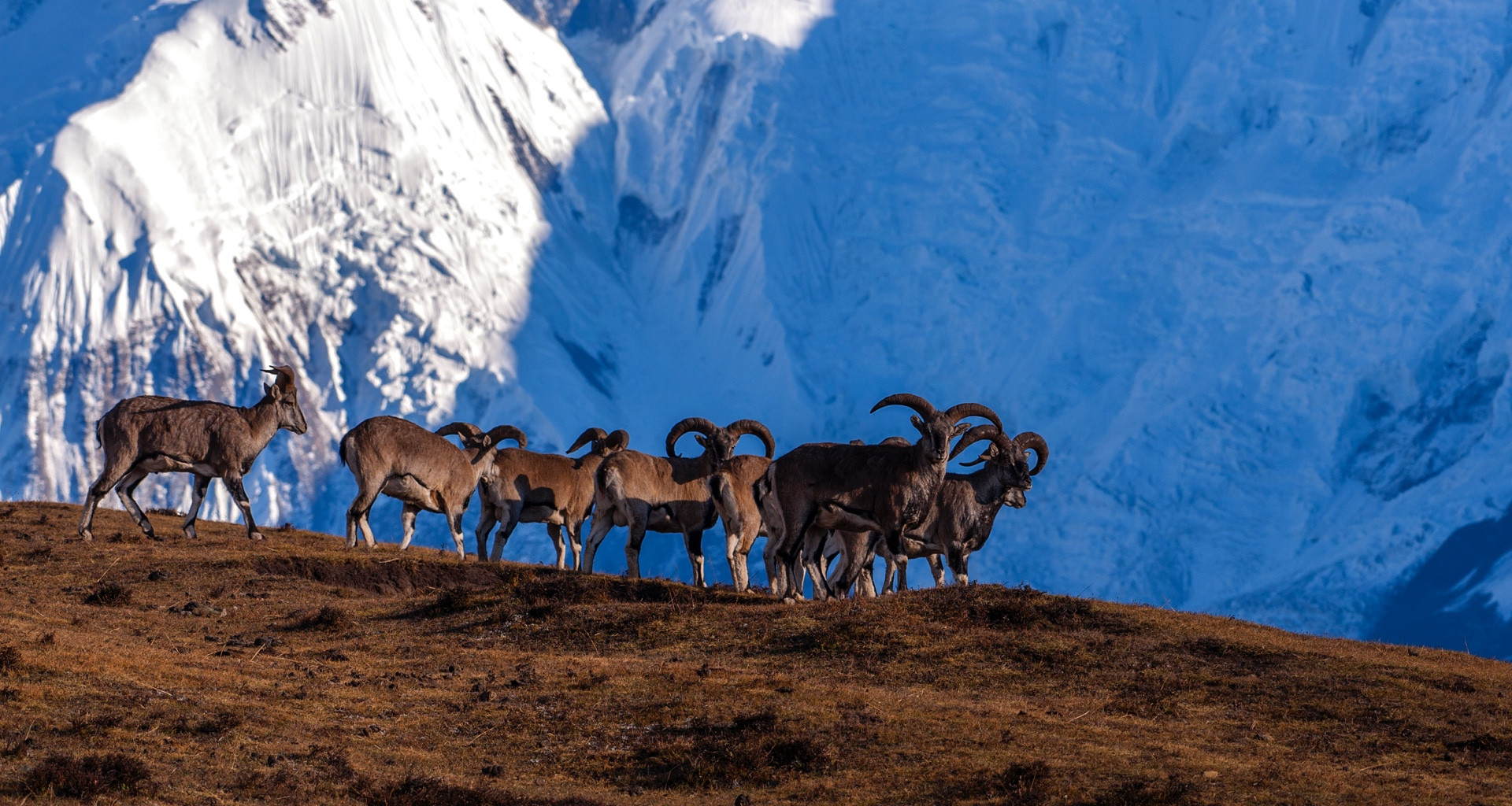
The main aim of ACAP is to conserve the biodiversity and cultural heritage of the area while promoting sustainable tourism. The ACA is a unique ecosystem that supports a wide variety of flora and fauna, including over 1,200 species of plants and 101 species of mammals, including snow leopards, Himalayan black bears, and red pandas. The area is also home to over 400 species of birds, including the endangered Himalayan griffon vulture and the impeyan pheasant.
The ACA is also rich in cultural heritage, with over 100,000 people living in the area belonging to various ethnic groups, such as Gurung, Thakali, and Manangba. These communities have their distinct languages, customs, and traditional practices that have been preserved for centuries. The ACA is an important site for pilgrimage and religious tourism, with several temples, shrines, and monasteries located throughout the area.
One of the most popular trekking routes in the world, the Annapurna Circuit, passes through the ACA. The route offers breathtaking views of the Annapurna and Dhaulagiri ranges, along with unique insights into the local culture and traditions. ACAP has set up several conservation and tourism initiatives along the route to ensure that the area’s natural and cultural heritage is protected while still promoting sustainable tourism.
ACAP has also launched several programs to promote community-based conservation and sustainable livelihoods in the area. The organization has set up community-managed micro-hydroelectric plants, which provide clean energy to local communities, reducing their dependence on wood and other non-renewable sources of energy. The program has also helped to create employment opportunities for local communities, providing them with a sustainable source of income.
Overall, the Annapurna Conservation Area is a unique ecosystem that is home to a diverse range of flora, fauna, and cultures. ACAP’s conservation and sustainable tourism initiatives have helped to protect this natural and cultural heritage while also promoting sustainable development in the area. The ACA is a testament to the fact that conservation and development can go hand in hand, and it serves as a model for other protected areas around the world.
Upon arrival at Tribhuvan International Airport in Kathmandu, you will be greeted by our representative and transferred to your hotel. The rest of the day is free for you to explore the city.
After breakfast, we will drive to Pokhara, the gateway to the Annapurna region. Along the way, we will pass through beautiful countryside and small villages. Upon arrival in Pokhara, we will check into our hotel and spend the rest of the day exploring the lakeside area.
After breakfast, we will drive to Nayapul and start our trek to Tikhedhunga. The trail passes through small villages and terraced fields, with stunning views of the Himalayas in the distance.
Today’s trek is a bit challenging as we climb up a steep trail to Ulleri, a village situated at an altitude of 2,070m. From here, the trail becomes more gradual as we trek through beautiful rhododendron forests to reach Ghorepani.
Early in the morning, we will hike up to Poon Hill to enjoy the sunrise over the Himalayas. From here, we can see panoramic views of Dhaulagiri and Annapurna ranges, as well as several other peaks. After spending some time at Poon Hill, we will trek down to Tadapani.
Today’s trek takes us through beautiful forests and small villages to reach Ghandruk, a Gurung village known for its unique culture and hospitality. We will have some time to explore the village and interact with the locals.
Today is the last day of our trek as we trek down to Nayapul and take a drive back to Pokhara. In the evening, we will have a farewell dinner and celebrate the completion of our trek.
After breakfast, we will drive back to Kathmandu. The rest of the day is free for you to explore the city or do some last-minute shopping.
Our representative will drop you off at the airport for your flight back home.
 Trip Code:
annapurna
Trip Duration:
9 Days
Destination:
Nepal
Group Size:
2+
Season:
Any time
Max Altitude:
Trip Starts/Ends:
kathmandu to kathmandu
Transportation:
Hike & roadways & Plane
Accomodation:
Hotel, Guest houses and Tended Camping
Trip Grade:
Trip Code:
annapurna
Trip Duration:
9 Days
Destination:
Nepal
Group Size:
2+
Season:
Any time
Max Altitude:
Trip Starts/Ends:
kathmandu to kathmandu
Transportation:
Hike & roadways & Plane
Accomodation:
Hotel, Guest houses and Tended Camping
Trip Grade: