

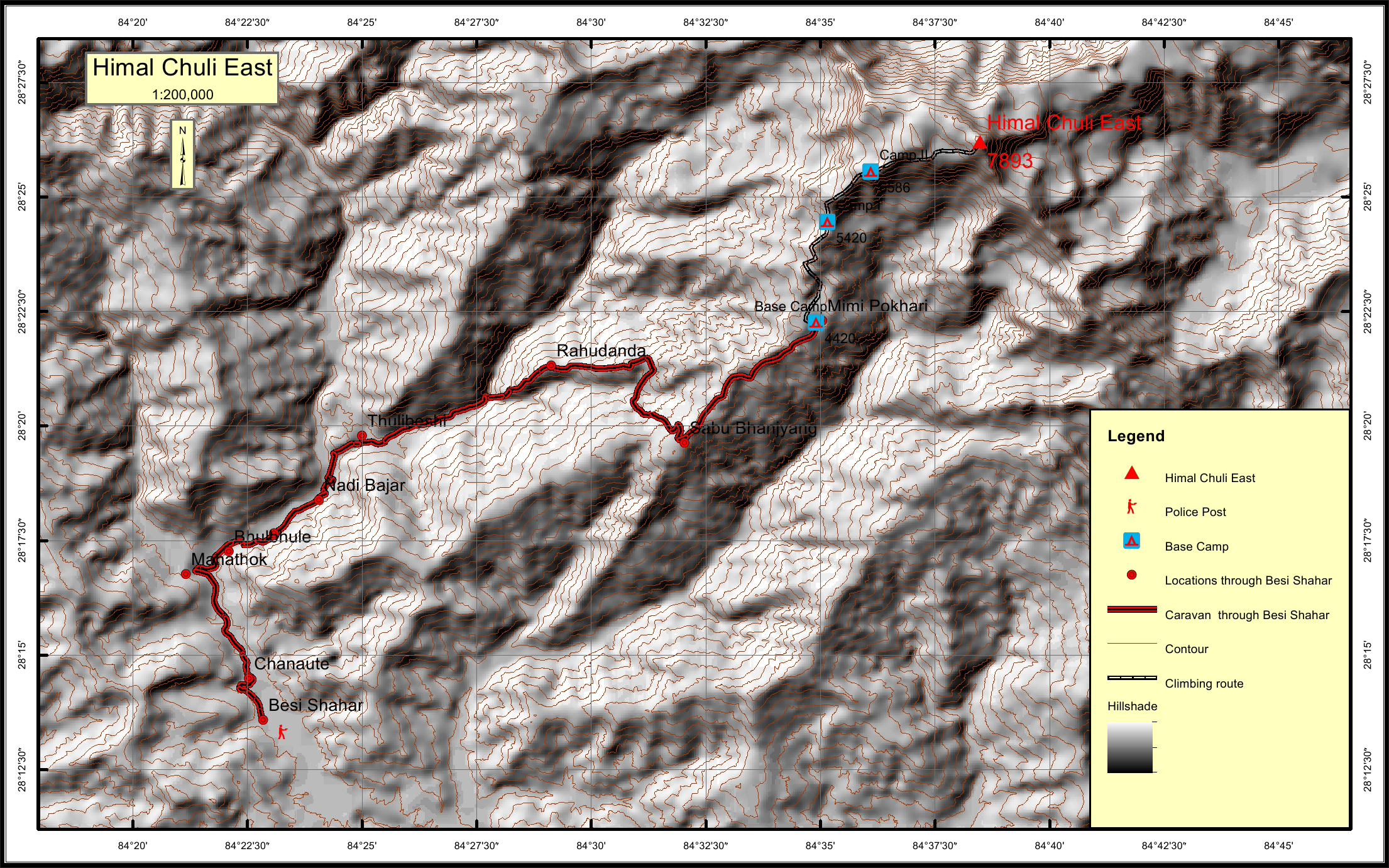




















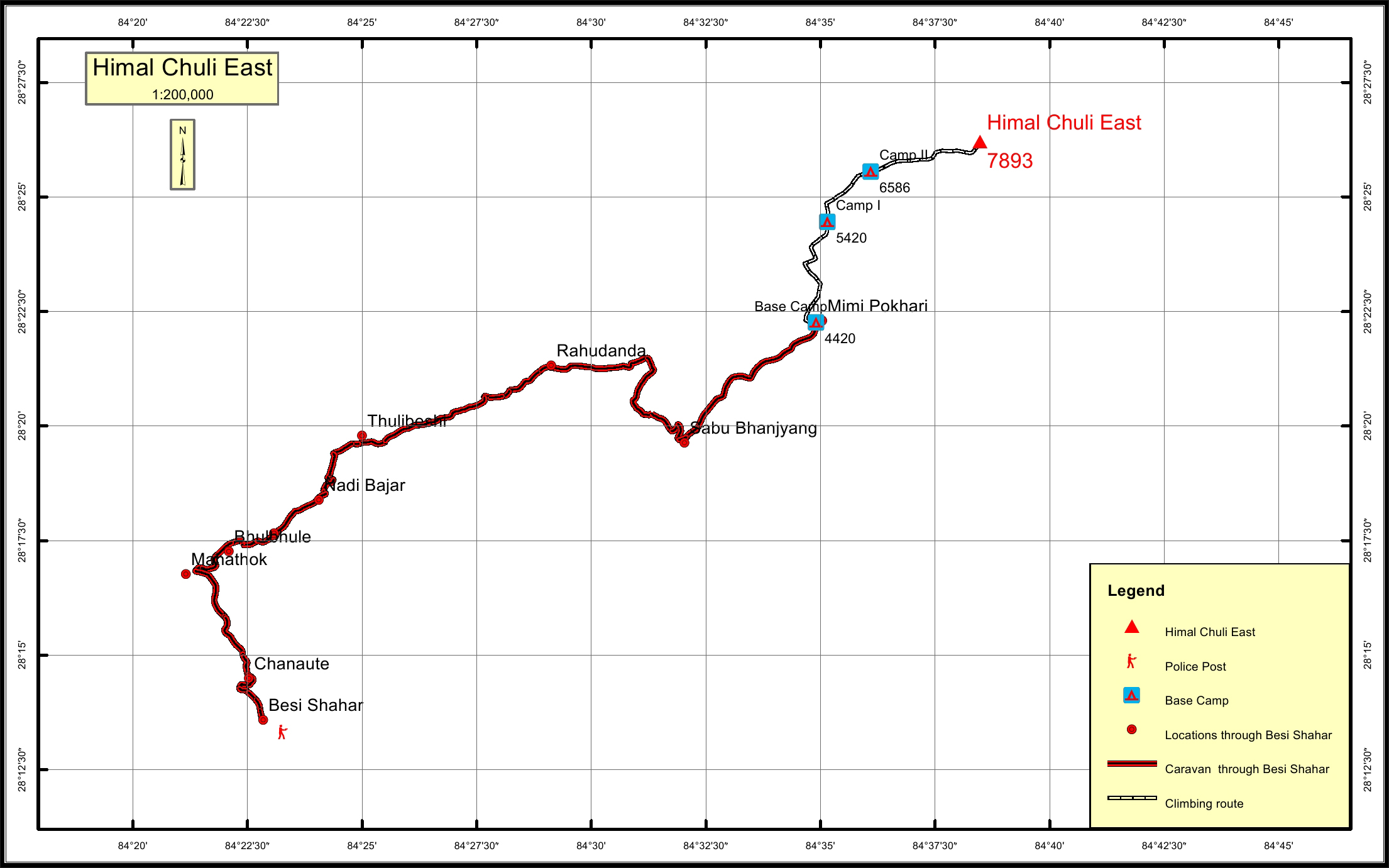
Himal Chuli, also known as Himal Chuli Main, is a mountain peak located in the Mansiri mountain range of Western Nepal. It has an elevation of 7893 meters (25896 feet) and is situated in the Lamjung and Gorkha districts of Gandaki Pradesh. The nearest settlement to the peak is Rahudanda, which is located 16.3 kilometers away.
The first successful ascent of Himal Chuli was made on May 24, 1960 AD (11/02/2017 BS) by Masahiro Harada and Hisashi Tanabe. The climbing route to the peak is 12.5 kilometers long and takes about 50 days to complete.
To reach Himal Chuli, one can drive from Kathmandu to Besisahar and then take the caravan route via Gorkha-Barpak-Rupina la-Chhilung Khola BC\ Arughat-Nyak-BC\ Besisahar-Nagdi-Mimi Pokhari-BC. The caravan route is 41.9 kilometers long and passes through Besi Shahar, which is the nearest police post.
Climbers interested in ascending Himal Chuli must pay a royalty fee to the Nepalese government. The fee for Nepalese climbers is Sp 8000 in the spring season, Sp 4000 in the autumn season, and Sp 2000 in the winter/summer seasons. For foreigners, the fee is USD 600 in the spring season, USD 300 in the autumn season, and USD 150 in the winter/summer seasons.
It’s important to note that climbers must obtain a climbing permit and go through a registered trekking agency to organize their climb. It is also recommended to hire an experienced guide and obtain proper insurance.
The Himal Chuli peak offers a challenging climbing experience and is suitable for experienced climbers. The climbing route involves technical sections and high altitude, and climbers must have the necessary skills and experience to tackle the peak safely. The best time to climb Himal Chuli is during the spring (March-May) and autumn (September-November) seasons when the weather conditions are favorable and visibility is good.
Overall, climbing Himal Chuli offers a rewarding experience to climbers who are up for the challenge. The peak offers stunning views of the Himalayan range, and the journey through the rugged terrain and remote villages of Western Nepal is an experience in itself.